Florida’s hurricane season runs from June 1 through November 30. During these six months, roofs may face strong wind, wind-driven rain, flying debris, high humidity, and repeated afternoon storms.
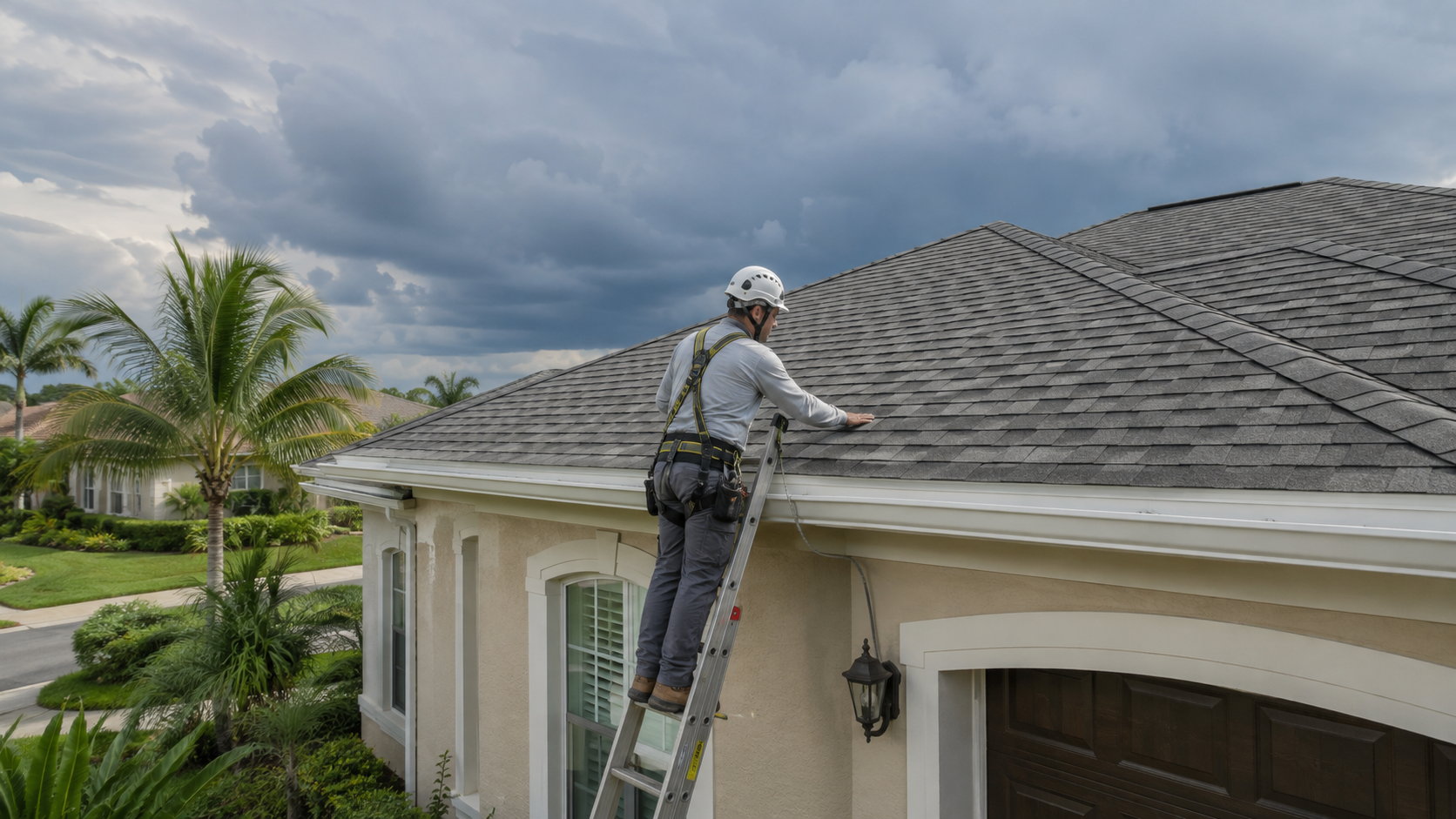
A roof does not need to be visibly collapsing to have a problem. One loose shingle, a deteriorated seal, or damaged flashing may be enough to let water reach the roof deck during heavy rain.
Checking the roof before severe weather develops gives homeowners more time to address small defects, document its condition, and understand which areas of the home may be vulnerable.
Why the Roof Deserves Extra Attention in Florida
The roof is one of the home’s main defenses against wind and water. When part of the roof covering lifts or detaches, rain can reach the materials underneath and spread into the attic, insulation, ceilings, or walls.
Storm damage is not limited to direct hurricane landfalls. Tropical storms, outer rain bands, and strong thunderstorms can also produce damaging wind, intense rainfall, and falling branches far from the center of a storm.
Florida’s climate adds another challenge. Heat, ultraviolet exposure, moisture, and frequent temperature changes can gradually affect shingles, sealants, fasteners, and flashing.
What Hurricane Winds Can Do to a Roof
Wind does not apply equal pressure to every part of a roof. Corners, edges, ridges, and overhangs can experience greater uplift forces than central areas.
When air moves over and around the structure, it can create pressure that pulls upward on the roof covering. If a shingle or metal panel is already loose, wind may lift it further and expose the underlayment or roof deck.
Research by the Insurance Institute for Business & Home Safety found that about half of the shingle roofs it studied after Hurricane Ian showed roof-cover damage. Roofs that were at least 10 years old were especially vulnerable. IBHS Hurricane Ian Roof Assessment
That does not mean every roof over 10 years old needs replacement. Age should be considered together with installation quality, material condition, maintenance history, previous storm exposure, and inspection findings.
Warning Signs That Should Not Be Ignored
Some roof problems are visible from the ground. Others first appear inside the attic or living space.
Exterior warning signs may include:
- Missing, lifted, cracked, or curling shingles
- Shingle granules collecting near downspouts
- Rust, loose seams, or displaced panels on a metal roof
- Damaged flashing around vents, skylights, or chimneys
- Sagging gutters or loose sections of the drainage system
- Tree branches touching or hanging directly over the roof
- Debris collecting in valleys
- Dark areas that remain wet after the rest of the roof dries
Interior warning signs may include:
- Brown or yellow marks on ceilings
- Peeling paint near the roofline
- Damp insulation
- Musty odors in the attic
- Water stains around vents or recessed lights
- Visible daylight entering through the roof deck
- Unexplained increases in indoor humidity
A ceiling stain may not appear directly below the point where water entered. Water can travel along decking, framing, pipes, or electrical components before becoming visible inside the home.
What a Pre-Storm Roof Inspection Should Cover
A professional roof inspection should evaluate more than the visible surface. The condition of the roof covering, drainage system, penetrations, and structural connections all influence how the roof performs during a storm.
Roof covering
The inspector should look for loose, broken, worn, or poorly sealed materials. On a shingle roof, this includes checking tabs, edges, valleys, ridge caps, and areas where granules have been lost.
Metal roofs require attention around panels, seams, fasteners, clips, and signs of corrosion. Even a durable material can become vulnerable if a connection is loose or a seal has deteriorated.
Flashing and roof penetrations
Flashing helps direct water away from joints and openings. It is commonly installed around plumbing vents, chimneys, skylights, roof-to-wall connections, and valleys.
Cracked sealant, lifted flashing, or corrosion can create a path for water. These areas are frequent sources of leaks because they interrupt the continuous surface of the roof.
Roof deck and attic
An attic inspection may reveal moisture, staining, damaged decking, poor ventilation, or gaps that cannot be seen from outside.
The roof deck is the structural surface beneath the roof covering. If it is deteriorated or inadequately attached, replacing shingles alone may not address the underlying weakness.
Gutters and drainage
Gutters, downspouts, valleys, and drains should allow water to move away from the structure. Leaves and debris can slow that flow and cause water to collect near roof edges.
Downspouts should discharge water away from the foundation when the property’s layout allows it. Overflowing gutters can affect fascia, soffits, walls, and landscaping.
Roof-to-wall connections
Hurricane straps or clips help connect the roof structure to the walls. The Florida Division of Emergency Management identifies roof-to-wall connections as part of the home’s exterior system that can improve resistance to hurricane forces when properly installed and maintained. Florida Division of Emergency Management
These connections are not usually visible during a basic exterior inspection. Access through the attic may be necessary, and evaluation should be performed by a qualified professional.
Roof Age Matters, but Condition Matters More
There is no single lifespan that applies to every Florida roof. Material type, installation, ventilation, sun exposure, storm history, maintenance, and surrounding trees can all affect service life.
Two roofs installed in the same year may be in very different condition. One may have proper ventilation and regular maintenance, while the other may have hidden moisture, repeated repairs, or installation defects.
The installation date is still useful information. Homeowners should keep permits, contracts, warranty documents, invoices, inspection reports, and photographs together in a secure digital location.
Maintenance Tasks to Complete Before a Storm
Routine maintenance cannot make a roof hurricane-proof. It can remove preventable hazards and correct defects that might worsen under wind and rain.
Useful pre-storm tasks include:
- Clearing leaves and debris from gutters and roof drainage areas
- Trimming weak or overhanging branches through a qualified tree service
- Repairing loose flashing and damaged roof materials
- Securing gutters, soffits, and fascia
- Checking attic areas for moisture or previous leaks
- Confirming that vents and other roof components are properly attached
- Moving unsecured outdoor objects that could become windborne debris
- Photographing the roof and exterior before severe weather arrives
- Reviewing insurance coverage, deductibles, and claim procedures
Repairs should be completed before a storm watch or warning whenever possible. Contractors, materials, and permit processing may become harder to obtain once a storm threatens the area.
Should Homeowners Inspect the Roof Themselves?
Homeowners can safely observe many conditions from the ground or through an accessible attic. Binoculars or a camera with zoom may help identify missing materials, damaged edges, or debris without climbing.
Walking on the roof creates a fall risk and may damage brittle, wet, or heat-softened materials. Roof work should be left to a qualified professional with appropriate safety equipment.
Attic inspections also require care. Do not step between structural members, touch exposed wiring, or enter an area with standing water, unstable decking, signs of electrical damage, or unsafe access.
What to Do After a Hurricane or Severe Storm
Safety comes before property inspection. Homeowners should wait until local authorities indicate that outdoor conditions are safe and stay away from fallen power lines, unstable trees, standing water, and visibly damaged structures.
Once conditions allow, inspect the property from the ground. Look for missing shingles, displaced metal, damaged gutters, fallen branches, debris impact, ceiling stains, or water entering the home.
Photograph visible damage before moving debris or arranging permanent repairs, when it is safe to do so. Keep copies of estimates, invoices, communications, and temporary repair expenses.
Avoid immediate permanent repairs
Temporary measures may be needed to prevent additional water entry. Permanent repairs should wait until the roof has been evaluated and required documentation has been collected.
Contact the insurance company promptly if the damage may be covered. Coverage varies by policy, and flood damage is generally treated differently from wind or rain damage.
Be cautious with contractors
Large storms often bring unfamiliar contractors into affected communities. Florida homeowners should verify licensing, review the written scope of work, understand payment terms, and avoid signing incomplete documents.
A contractor’s license can be checked through the Florida Department of Business and Professional Regulation.
Homeowners should also ask who will obtain permits and whether subcontractors will be used. Local building departments can confirm whether a permit is required for the proposed work.
Repair or Replace: How Is the Decision Made?
A leak does not automatically mean that the entire roof must be replaced. Damage around one vent, flashing section, or small group of shingles may be repairable.
Replacement may be considered when damage is widespread, the roof covering is near the end of its useful life, the deck has deteriorated, repairs cannot be integrated reliably, or the system no longer meets applicable requirements.
The decision should account for:
- The location and extent of the damage
- The age and overall condition of the roof
- The availability of compatible materials
- Previous repairs or recurring leaks
- The condition of the roof deck
- Current building-code requirements
- Warranty and insurance considerations
- The expected durability of the proposed repair
A written inspection report can help homeowners compare recommendations. It should identify observed conditions and explain why a repair or replacement is being proposed.
Can Roof Improvements Reduce Hurricane Damage?
No roof can be guaranteed to survive every hurricane. Stronger materials, correct installation, protected openings, roof-deck attachment, sealed roof decks, and proper roof-to-wall connections can reduce certain vulnerabilities.
The Florida Building Code establishes requirements for roof assemblies and wind resistance. Requirements may vary according to building location, risk category, wind speed, roof geometry, and whether the property is inside a High-Velocity Hurricane Zone.
Florida also operates hurricane-loss mitigation initiatives focused on improving property resilience and reducing storm damage. The state uses the Florida Building Code as the standard for retrofits funded through its Hurricane Loss Mitigation Program. Florida Hurricane Loss Mitigation Program
Frequently Asked Questions
How often should a Florida roof be inspected?
A practical approach is to have the roof inspected periodically and after a storm that may have caused damage. Older roofs, properties surrounded by trees, and roofs with previous leaks may require closer monitoring.
The right schedule depends on material, age, condition, storm exposure, and warranty requirements. Homeowners should also inspect the property from the ground after severe weather.
Can a roof leak even if no shingles are missing?
Yes. Water may enter through deteriorated flashing, damaged sealant, punctures, improperly installed vents, valleys, roof-to-wall joints, or defects beneath the visible covering.
Wind-driven rain can reach openings that do not leak during normal rainfall. An interior stain should be investigated even when the roof looks intact from the ground.
Does homeowners insurance cover hurricane roof damage?
Coverage depends on the policy, cause of damage, deductible, exclusions, and condition of the roof. Wind damage may be covered under some policies, while flooding generally requires separate coverage.
Homeowners should review their policy before a storm and ask the insurer to explain hurricane or windstorm deductibles in writing.
Should gutters be removed before a hurricane?
Properly installed gutters are normally part of the roof’s drainage system and should not be removed simply because a storm is approaching. Loose or damaged sections should be repaired because they may detach in strong winds.
Cleaning gutters before severe weather can help heavy rainfall drain more effectively.
Can roof repairs be completed during hurricane season?
Yes, but timing matters. Routine repairs are safer and easier to schedule before a storm threatens the area.
Work should not take place during unsafe weather. Permits, inspections, product requirements, and local building rules still apply during hurricane season.
What records should homeowners keep?
Keep roof permits, installation dates, contracts, warranties, inspection reports, maintenance invoices, and photographs. Store digital copies somewhere accessible if the home cannot be entered after a storm.
Before-and-after photographs can help document changes in the roof’s condition, although they do not guarantee insurance coverage.
A Practical Roof Checklist for Florida Hurricane Season
Before severe weather develops, homeowners should confirm that:
- The roof has no known active leaks
- Damaged or loose materials have been evaluated
- Flashing and penetrations appear properly sealed
- Gutters and drainage paths are clear
- Overhanging or damaged branches have been addressed
- Attic areas show no unexplained moisture
- Roof and insurance documents are accessible
- Current exterior photographs have been saved
- Contractor and insurance contact information is available
- Outdoor objects that could become debris can be secured
A pre-storm inspection provides the most value when there is still time to correct a problem. Once a hurricane watch is issued, the priority should shift from construction work to personal safety and the instructions provided by local emergency officials.